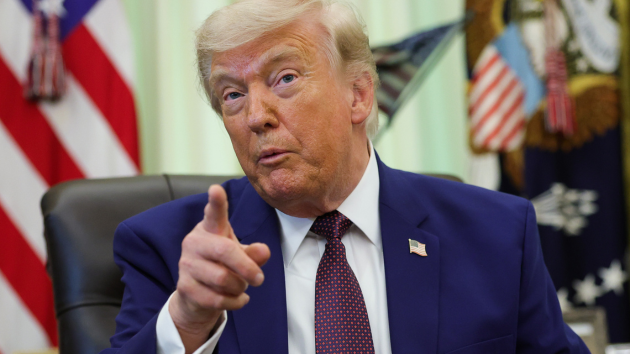
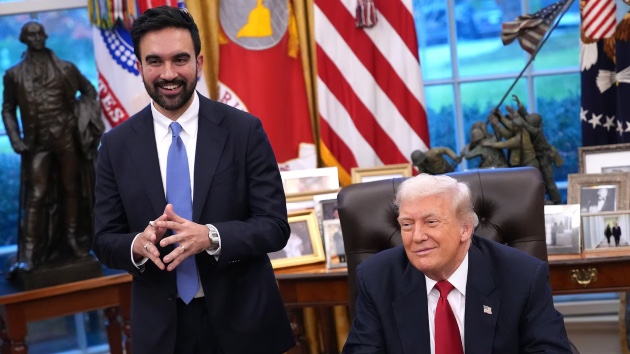
U.S. President Donald Trump speaks during an event in the Oval Office of the White House on June 03, 2026, in Washington, DC. Trump signed executive orders related to strengthening customs enforcement and reforms to federal work laws. (Photo by Kevin Dietsch/Getty Images)
(WASHINGTON) -- A federal judge on Monday struck down the $100,000 fee the Trump administration imposed on new H-1B visas for skilled foreign workers.
In a 42-page decision, U.S. District Judge Leo Sorokin vacated the policy nationwide, concluding that the federal government overstepped its authority by imposing the fee without approval from Congress.
This is a developing story. Please check back for updates.
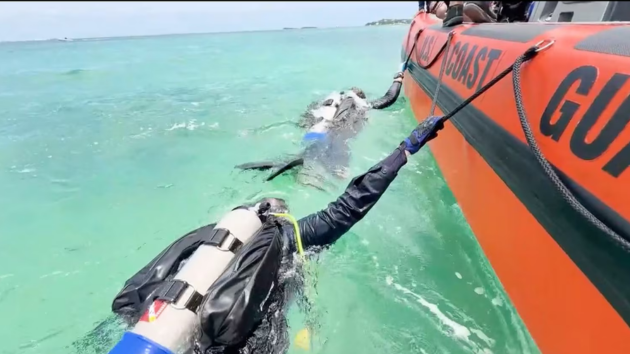
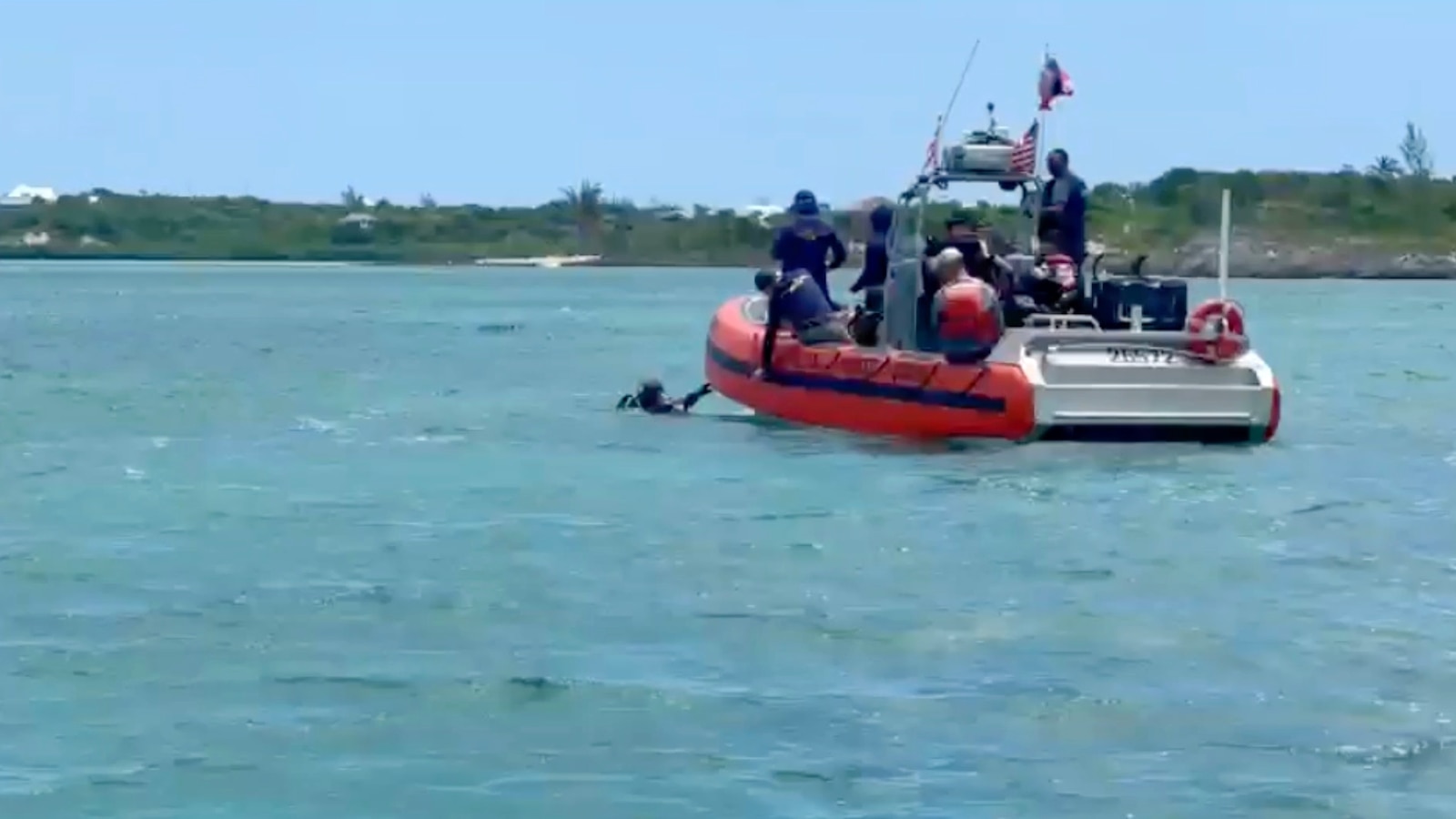
The Coast Guard searching for a missing person, Lynette Hooker, in the Bahamas. (U.S. Coast Guard)
(BAHAMAS) -- The Coast Guard released new photos on Monday as it announced that it has concluded its search in the Bahamas for Lynette Hooker, an American woman who went overboard and vanished two months ago.
The Coast Guard said it used divers, underwater vehicles, drones and a cadaver dog to "thoroughly examine newly identified areas of interest" last week.
The agency said it also took custody of the Hookers' dinghy so it can be further examined in the U.S.
Last week's search came after forensic evidence found on electronic devices belonging to Lynette Hooker's husband, Brian Hooker, led investigators to new areas of interest, U.S. officials said. One U.S. official told ABC News that what Brian Hooker told investigators does not match the GPS data recovered from his devices.
Lynette Hooker went missing on the evening of April 4. Brian Hooker told authorities that after the couple departed Hope Town on their dinghy to head to their yacht, bad weather caused her to go overboard.
Brian Hooker was arrested on April 8 and questioned by police, and he was released days later without charges.
The Coast Guard said its investigation continues and asks anyone with information to contact the Coast Guard Investigative Service Tips app.
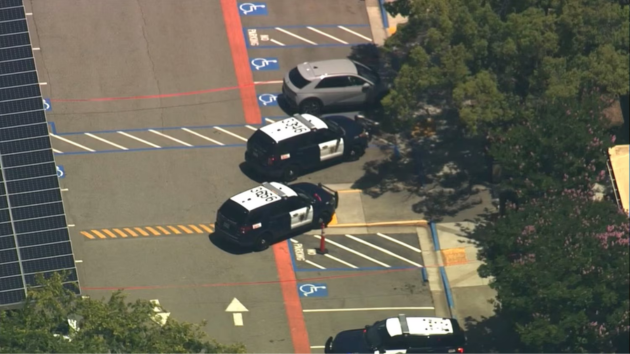
Law enforcement at the scene of a shooting in San, Jose, Calif., June 8, 2026. (KGO)
(SAN JOSE, Calif.) -- Two people suffered life-threatening injuries in a shooting at the Kaiser medical offices in San Jose, California, authorities said.
The San Jose Police Department described the victims as a man and a woman and said both have been taken to the hospital.
Police said the shooting is believed to be an isolated incident and said there's no threat to the public.
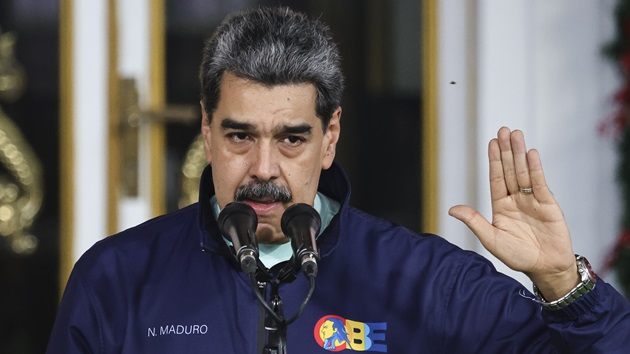
President of Venezuela Nicolás Maduro speaks during a march on November 21, 2025 in Caracas, Venezuela. (Jesus Vargas/Getty Images)
(NEW YORK) -- A federal judge on Monday set a tentative date for the trial of the U.S. Army special forces soldier who is charged with using classified information about the capture of Venezuelan President Nicolas Maduro to make more than $400,000 on the prediction market Polymarket.
The criminal trial of Master Sgt. Gannon Ken Van Dyke is tentatively scheduled for Dec. 7.
Van Dyke pleaded not guilty in April after prosecutors alleged he used inside information to place 13 bets on the outcome of the Maduro raid then attempted to destroy evidence of the trades after he pocketed more than $400,000.
The case would be the first U.S. prosecution of insider trading on a prediction market to go to trial.
Prosecutors on Monday estimated their case would take about one week, and defense lawyers said they plan to put on a brief case that would take a "couple of days."
Defense lawyers said they plan to file a motion to dismiss the indictment by July 31.
Defense attorney Mark Geragos argued in court that the prosecution would be derailed by the classified information at the center of the case. To convict Van Dyke, he argued, prosecutors would need to prove "who was in the Situation Room at that time and who made the decision" to capture Maduro.
Van Dyke, who sat at the defense table during Monday's proceedings, did not speak.
During Van Dyke’s arraignment in April, his defense attorney said he expected few factual disputes over the allegations in the case and believed that the prosecution would "largely rise and fall" on pre-trial motions.
Van Dyke, an experienced special forces soldier, was released on a $250,000 personal recognizance bond following his April arraignment. According to his attorney Zach Intrater, he is currently on leave from the Army.
Allegations of insider trading have prompted public scrutiny of prediction market sites like Polymarket and Kalshi. Prosecutors in New York last month charged a Google employee with using confidential company information to make more than $1.2 million on Polymarket.
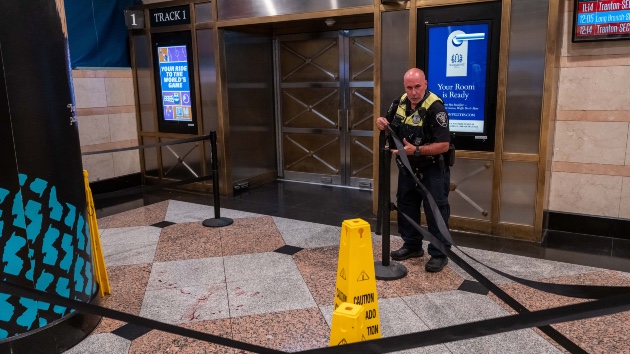
An Amtrak police officer moves barriers at the scene of a stabbing in Penn Station on June 7, 2026 in New York City. (Photo by Adam Gray/Getty Images)
(NEW YORK) -- Five people were stabbed Sunday evening at New York City's Penn Station by a man experiencing homelessness, sources told ABC News.
The suspect, a man in his 50s who has not been publicly named, was taken into police custody on Sunday, sources said.
None of the injuries are believed to be life-threatening, sources said.
Victim Henry Obadiah, who was slashed on the cheek and the lip, told ABC New York station WABC he was on his way out of Penn Station in Midtown Manhattan when the suspect "locked eyes with me."
"Then he just came at m. ... got me right in the face," the 60-year-old said. "I hear this guy on the escalator go, 'He's got a knife, he's got a knife.'"
Obadiah said he told a responding officer he could identify the suspect and he went back into Penn Station with police.
He said he saw a "trail of blood" leading to another victim.
"People were running all over the place," he said, describing it as a "crazy scene."
Obadiah said he was taken to a hospital and received several stitches in his lip.
"My heart is with everyone who was injured, their loved ones, and all those shaken by this unacceptable violence," Mayor Zohran Mamdani said in a statement posted on social media. "I'm wishing each of the victims a full and speedy recovery."
Mamdani praised the "swift response" by Amtrak police and other first responders, who he said "acted quickly to apprehend the suspect and provide emergency care."
The stabbings unfolded one night before Game 3 of the NBA Finals at Madison Square Garden, which is directly above Penn Station. President Donald Trump will attend Monday night's game, prompting massive security protocols and the cancellation of the watch party outside of Madison Square Garden.
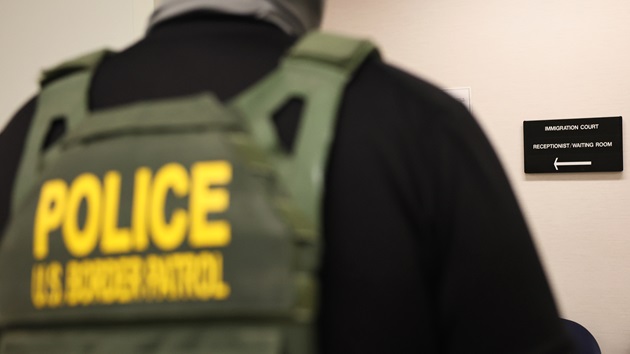
Federal agents patrol the halls of immigration court at the Ted Weiss Federal Building on July 09, 2025 in New York City. (Michael M. Santiago/Getty Images)
(WINNFIELD, La.) -- A Georgian immigrant who officials said died last week in Immigrant and Customs Enforcement custody is the 50th person to die in ICE detention during the second Trump administration.
Mamuka Artmeladze, 43, died on June 4 at the Winn Correctional Center in Louisiana, according to an agency notification sent to lawmakers.
In the notification, ICE officials said that Artmeladze was found unresponsive and was transported to a local medical center.
"Despite lifesaving efforts, at approximately 11:22 p.m., an onsite physician at Winn Parish Medical Center pronounced Artmeladze deceased," ICE said. "His official cause of death is currently pending an autopsy."
ICE said that Artmeladze was taken into custody in February in New Orleans during an operation "targeting commercial vehicle drivers who posed public safety risks."
"ICE took him into custody after officials determined he had no lawful status to remain in the United States," the agency said.
The increase in ICE deaths comes amid scrutiny from lawmakers and immigrant advocates about the conditions at detention centers during the Trump administration's ongoing immigration crackdown.
According to an ABC News analysis of Immigration and Customs Enforcement data and the number of detainee deaths provided to Congress from ICE, the first 14 months of the second Trump administration represent the most deadly period for the federal detention system in recent years -- with the exception of 2020, when the coronavirus pandemic contributed to detention deaths.
Last week, ICE ended a policy that required the agency to report the deaths of former detainees that occurred within 30 days of their release from federal custody.
The policy, issued during the Biden administration, directed the agency to review and report all detainee fatalities, including those that occurred up to a month following release.
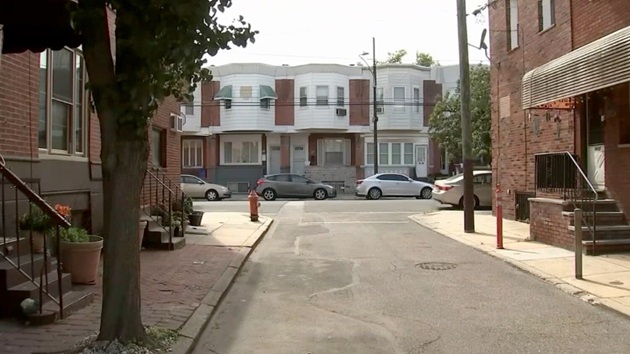
William Schmidt, 22, was shot and killed about one block from his home in South Philadelphia, June 6, 2026. (WPVI)
(PHILADELPHIA) -- Officials at Penn State University said they're "heartbroken" after a student was shot and killed about one block from his home in Philadelphia.
William Schmidt, 22, was shot at about 1:30 a.m. Saturday and officers found him lying in the road with a gunshot wound to his chest, according to Philadelphia police.
Schmidt was taken to a hospital where he was pronounced dead at 1:47 a.m., police said.
Authorities have not announced any arrests or any motive.
Schmidt was studying digital journalism and media at Penn State World Campus, the university said.
"We are heartbroken over the tragic death of William Schmidt, and we share our deepest condolences with his family and friends," a Penn State spokesperson said in a statement.
Police urge anyone with information to call the homicide unit at 215-686-3334 or submit an anonymous tip at 215-686-TIPS.
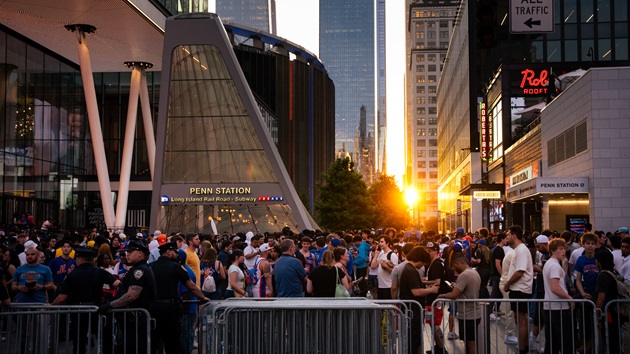
New York Knicks fans arrive outside Penn Station and Madison Square Garden before Game 2 of the NBA Finals against the San Antonio Spurs on June 05, 2026 in New York City. (Angelina Katsanis/Getty Images)
(NEW YORK) -- With President Donald Trump expected to attend Game 3 of the NBA Finals between the Knicks and Spurs on Monday night, the New York Police Department and the Secret Service say they are planning to put Madison Square Garden on "lockdown."
During a news conference Monday morning, NYPD Commissioner Jessica Tisch said police officers will establish a block-to-two-block-radius security perimeter around the Midtown Manhattan arena, canceling a fan watch party that was set to occur outside the venue.
"I think New Yorkers are used to presidents coming to town, and that they understand that that generally means lockdown of areas, and that's what you're going to see tonight at the Garden," Tisch said.
Beginning at 4 p.m. ET, four-and-a-half hours before the start of the game, police will start blocking off streets and avenues around Madison Square Garden, creating a security frozen zone, according to Tisch.
"No one will be allowed inside the secured area unless they have a ticket to the game, a train ticket, they are going to a business inside the area, they have credentials, or they have some other authorized reason to be there," she said.
Tisch said no one will be allowed in the secured area with a backpack unless they are going to nearby Pennsylvania Station to catch a train.
Matt McCool, special agent in charge of the U.S. Secret Service Field Office in New York, advised ticketed fans to arrive at the Garden two hours before game time to ensure they make it through the "multiple layers" of security, including magnetometers, in time for the 8:30 p.m. ET tipoff.
In coordination with the Secret Service, Tisch said a decision was made to cancel Monday night's fan watch party outside of Madison Square Garden due to Trump attending the game.
But Tisch said other watch parties are scheduled for Monday night, including one hosted by New York Mayor Zohran Mamdani at Bryant Park, about a mile east of the Garden.
Mamdani said last week that he also plans to be at the Garden for Game 3.
Tisch said the watch party outside the Garden will resume for Game 4 on Wednesday night.
'Heightened risk' for malicious actors
The return of the NBA Finals to New York comes with a "heightened risk of attention by malicious actors across the ideological spectrum," according to a New York Police Department assessment obtained by ABC News.
Those malicious actors "may use high-profile sporting events as an attractive opportunity for targeted violence or disruption," the document said.
The Knicks are set to host their first NBA Finals in 27 years on Monday night.
The Knicks lead the series two games to none over the San Antonio Spurs in New York's quest to win its first NBA championship since 1973.
Commissioner issues warning
Thousands of Knicks fans gathered outside Madison Square Garden on Friday night to watch Game 2 of the NBA Finals, which was played in San Antonio.
But celebrations after the Knicks' victory led to multiple arrests and an injured police officer, according to the NYPD.
The NYPD said the crowd became increasingly disorderly throughout the evening. Officers made an arrest for assault and for individuals climbing light poles before the game ended.
Following the Knicks' victory, police said multiple people refused orders to leave the area, blocked traffic along Seventh and Eighth Avenues from West 31st Street to West 35th Street, and climbed onto food vendor carts, light poles and subway entrances.
According to police, one person jumped over a barrier into a restricted area. When an officer attempted to remove the individual, the person allegedly punched the officer in the face multiple times, causing lacerations that required medical treatment. The officer was later treated and released.
Police also arrested several people accused of selling counterfeit merchandise. One of those individuals faces an additional charge of possessing a loaded firearm, according to the NYPD.
In total, 26 people were taken into custody on Friday. Police said 17 people were arrested and charged, while nine others were issued criminal court summonses for disorderly conduct and released.
NYPD Commissioner Tisch has warned fans to be on better behavior for this week's games in New York.
"We will have no tolerance for violence, particularly violence against police officers, destruction of property, climbing on light poles or structures, blocking emergency vehicles or other chaotic behavior," Tisch said.
In this Nov. 21, 2025, file photo, President Donald Trump meets with New York City Mayor-elect Zohran Mamdani in the Oval Office of the White House, in Washington, D.C. (Andrew Harnik/Getty Images)
(NEW YORK) -- Madison Square Garden is set to be filled to the brim Monday night with passionate Knicks fans decked out in their orange and blue pride, but eyes may be on what two of the most powerful New Yorkers will be doing during Game 3 of the NBA Finals.
President Donald Trump and Mayor Zohran Mamdani have said they will be attending the game and cheering on the Knicks as they seek another win in the best-of-seven series.
Trump, who has sat courtside at many Knicks games before being elected president, said he was personally invited by Jim Dolan, the team's owner and longtime friend of the president.
"They're really great, a great team. I'm happy for Jim because Jim has really been fighting hard to produce such a team," Trump told reporters Thursday.
It's highly unlikely that if Trump attends, he will be sitting courtside due to security concerns, and it's not known who he will be seated with.
The president isn’t expected to be the only major elected official in the "World's Most Famous Arena" during tip-off, as Mamdani revealed Thursday he will be attending the game.
"I'm paying for my own ticket," the mayor said in an interview with radio station 1010 Wins Friday.
Trump and Mamdani have had personal meetings at the White House ever since the Democratic Socialist won the 2025 mayoral election.
However, Mamdani indicated on Thursday that he will be "in a very different section of the stadium" than the president during the game. He has dodged several questions about whether he will meet with Trump during his trip to New York.
"If I do see him, I will let him know what I've said time and again, which is we're excited to welcome anyone and everyone who's rooting for the Knicks," Mamdani told 1010 Wins Friday.
The mayor had previously watched the Knicks beat the Cleveland Cavaliers in Game 2 of the Eastern Conference finals on May 21 and was seated high up in the cheaper seats along with city public advocate Jumaane Williams.
Their attendance was unannounced before the game.
Mamdani indicated that once again he would not be in the best seats in the Garden for Monday's matchup.
"I can tell you that I won’t be courtside or in a suite, but I can’t wait to see the game," he told the radio station.
Mamdani has been vocally critical of the Trump administration's policy on immigration, government cuts and threats to cut funding to Democratic run states and cities.
During the election, Trump vocally decried Mamdani, calling him a "communist" and warning that New York would be in a worse place under his leadership.
The president's tone changed on Nov. 21, when Mamdani met with Trump in the Oval Office and they emerged with a much more amicable relationship.
"I think this mayor could do some things that are going to be really great,” Trump said in a news conference after the meeting, where he smiled, shook Mamdani's hand and even patted him on the back.
The mayor and president met another time in the winter and Mamdani has said he has spoken to Trump on the phone numerous times about matters to the city.
Mamdani has maintained his opposition to many of the president's policies but has maintained he is open to working with him to help New Yorkers, especially when it comes to driving down housing costs.
Jonathan Rinderknecht is seen in a photo released by the Department of Justice. (Department of Justice)
(LOS ANGELES) -- The federal trial for a man accused of starting a fire that eventually became the deadly blaze that devastated the Pacific Palisades neighborhood of Los Angeles last year is set to begin.
Jury selection is scheduled to begin Monday in the case against Jonathan Rinderknecht, who is accused of "maliciously" starting a fire that six days later developed into what became known as the Palisades Fire, one of the most destructive wildfires in Los Angeles history.
Rinderknecht, a former Los Angeles resident living in Florida, was arrested nine months after the Palisades Fire leveled neighborhoods in Los Angeles County and left 12 people dead.
He was indicted on three counts -- destruction of property by means of fire, arson affecting property used in interstate commerce and timber set afire. He pleaded not guilty and faces up to 45 years in prison if convicted.
Federal prosecutors allege that Rinderknecht, who was working as an Uber driver at the time, ignited a brush fire that became known as the Lachman Fire on Jan. 1, 2025.
Despite being suppressed by fire crews, prosecutors allege that the fire continued to smolder until it surfaced again nearly a week later amid high winds in the Los Angeles area, eventually becoming the Palisades Fire.
In a criminal complaint, authorities allege Rinderknecht caused the initial fire by lighting a combustible material, such as vegetation or paper, with an open flame, likely a lighter.
The complaint included an image Rinderknecht allegedly generated in July 2024 using ChatGPT, showing in part "a burning forest and a crowd fleeing from it."
"You could see some of his thought process in the months leading up, where he was generating some really concerning images up on ChatGPT, which appears to show a dystopian city being burned down," First Assistant U.S. Attorney Bill Essayli said during a news conference following Rinderknecht's arrest in October 2025.
In a court filing last month, the defense stated that Rinderknecht "denies he willfully and maliciously set" the Lachman Fire "and therefore cannot be responsible for either the Lachman or the Palisades Fire, or the resulting damages." The defense attorney, Steven Haney, also questioned the government's "holdover theory," which posits that the Palisades Fire was caused by the Lachman Fire, and argued that the fires were two distinct events.
The trial is estimated to last seven to 11 days.
The Palisades Fire erupted on Jan. 7, 2025, burning more than 23,000 acres over more than three weeks and destroying nearly 7,000 structures, decimating the Pacific Palisades neighborhood of Los Angeles, according to California fire officials.
It ignited the same day as the Eaton Fire, which burned more than 14,000 acres in Los Angeles County, destroying more than 9,400 structures and killing 19 people, according to officials.
The fires started burning during strong Santa Ana winds, which, combined with dry conditions, helped their ability to spread quickly.
Investigators pursued more than 200 leads, conducted hundreds of interviews and collected more than 13,000 pieces of evidence, including fire debris, digital data and DNA samples, as part of the probe into the cause of the Palisades Fire, according to Kenny Cooper, special agent in charge of the Bureau of Alcohol, Tobacco, Firearms and Explosives' Los Angeles Field Division.
"We have a lot of different data that all concluded where this fire started, and the fire behavior from that origin, from that Lachman Fire, was clearly established in the Palisades Fire," Cooper said at a press briefing last year.
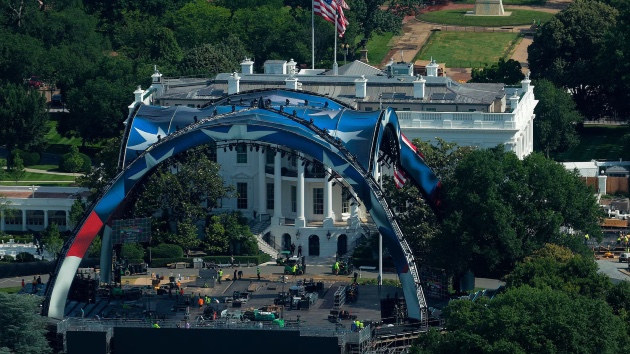
Preparations continue for the Ultimate Fighting Championship Freedom 250 event on the White House South Lawn on June 05, 2026 in Washington, DC. (Chip Somodevilla/Getty Images)
(WASHINGTON) -- One week ahead of the White House hosting an Ultimate Fighting Championship event, a public interest law firm is attempting to stop the high-profile sports event from taking place.
In a lawsuit filed this weekend, the Public Integrity Project -- representing a political activist and Vietnam veteran -- claimed the event was improperly permitted, skipped an environmental review, and is an extraordinary use of public land to benefit President Donald Trump and his allies.
They asked a federal judge to declare the authorization for the event, framed around the country’s 250th anniversary, unlawful. Scheduled to take place on Sunday, which is also President Trump’s birthday, the UFC plans to host a mixed martial arts event in a caged octagon on the South Lawn of the White House, as well as host thousands of fans at the nearby Ellipse.
“The President is giving [Dana] White and his company what none have enjoyed before: unfettered access to the White House and Lincoln Memorial to stage a private, for-profit sports event, with all the promotional and branding opportunities that accompany such access,” the lawsuit said.
The White House and UFC did not immediately respond to ABC News' request for comment.
Calling the event “deeply corrupt,” the lawsuit alleged that the Trump administration improperly used a temporary rule for “America 250” to bypass the permitting requirements normally required to host events on National Park Service land. They argue that because the event is being organized by a private entity, not the federal government, and is not explicitly “for the celebration of the 250th anniversary of American Independence,” the fight does not qualify for that temporary rule.
“It is not in any material sense a ‘celebration of the 250th anniversary of American Independence’—it is, instead, a celebration of the UFC’s brand and the 80th anniversary of Donald Trump’s birth,” the lawsuit said.
The lawsuit also alleged that the construction of the 600-ton steel arch over the South Lawn should have undergone an environmental review under the National Environmental Policy Act.
The lawsuit was filed by a retired government employee who frequently attends protests and other events near the National Mall and White House as well as a Vietnam War veteran who said he frequently enjoys the DC landscape while working part-time as a rideshare driver. The lawsuit alleged they are suffering “aesthetic, dignitary, and procedural harms as a result of Defendants’ unlawful acts.”
Lawsuits challenging Trump’s attempt to reshape the White House and DC have had a mixed track record, in part because judges are often skeptical if plaintiffs have standing to sue. A judge attempted to block construction of Trump’s ballroom before his ruling was lifted by an appeals court. Lawsuits challenging his planned arch, golf course renovations and the repainting of the reflecting pool have so far been unsuccessful in stopping work. As of Sunday, the case was assigned to Judge Amit Mehta, an appointee of former President Barack Obama.
In addition to alleging improper permitting and a lack of a necessary environmental review, the lawsuit alleged that Trump and his allies are profiting from the event. The lawsuit noted that Trump owns some stock in UFC’s parent company, that the UFC is selling VIP packages for more than $1 million while offering sponsorships to an overseas cryptocurrency exchange, and how the fight is being streamed through the UFC’s broadcast partner Paramount Skydance.
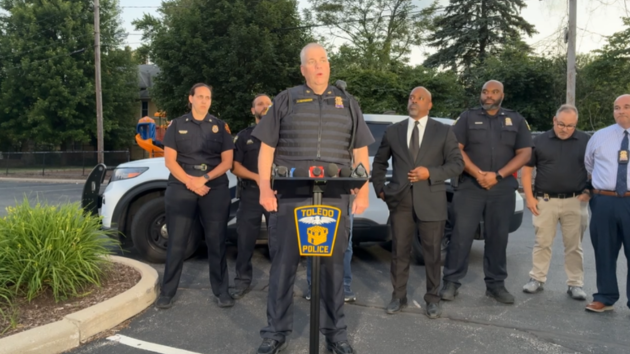
Toledo Police Deputy Chief Joseph Hefferman gives an update on the shooting to the media. (Toledo Police Department/Facebook)
(TOLEDO, Ohio) -- Twelve people were wounded, two critically, after gunfire broke out near an outdoor festival in Toledo, Ohio, on Saturday evening, police said.
Toledo Police Deputy Chief Joseph Heffernan said it appears there were at least two shooters who "probably" began shooting toward each other, with the victims caught in the crossfire.
Lt. Dan Gerkin said the ages of those shot ranged from 14 to 61.
No suspects are in custody.
The incident began unfolding around 5:37 p.m. local time when police received a call for a shooting near the Old West End Festival, a community event celebrating the historic neighborhood.
Police said the investigation continues.
"We'll dissect what happened and who was responsible and certainly the motives are going to be one of them," the deputy chief said. "You know, why would somebody do something like this? It's horrible."
He added later, "This is a perfect example of when bullets start flying, they can go anywhere. They can strike anybody."
George Kral, the city's director of public safety, urged anyone with information or evidence to come forward.
"There were several hundred people there tonight and everyone has one of these," said," he said, holding up a cellphone. "I know in my heart that footage is out there. So I am imploring my fellow Toledoans to look through your cellphone video and reach out to [the Toledo Police Department] and help them catch the people who did this."
He added, "This is one of the most iconic festivals in Toledo, and it's a shame that something like this had to ruin it."
Anyone with information can text or call Crime Stoppers at 419-255-1111.
Toledo, a city of about 270,000 people, is located in Northwest Ohio.
In a message posted to its website, the festival announced that further events planned for Sunday were cancelled.
Christine Banfield is seen in an undated photo. (Photo obtained by ABC News.)
(NEW YORK) -- A Virginia man found guilty of killing his wife and a stranger lured to their home in an elaborate plot to get rid of his spouse so he could be with his au pair was sentenced to life in prison on Friday, with the judge calling the crimes "unfathomable."
Brendan Banfield was convicted in the 2023 murders of his wife and a man prosecutors said he "catfished" on a fetish website. Prosecutors said Brendan Banfield pretended to be his wife to lure the man to their Fairfax County home for what was believed to be a consensual fake rape scenario in order to frame that stranger for his wife's murder.
A jury found him guilty of two counts of aggravated murder in February. The judge denied a defense motion to overturn his murder convictions on Thursday, ahead of his sentencing.
"It is a harsh sentence, but in this case it is a justified one," Judge Penney Azcarate said while handing down the life sentence without the possibility of parole.
"The disregard of the life of your wife, someone you supposedly loved, is almost unfathomable," she said.
"Scheming for months, a master plan involving so many moving parts, including deception and manipulation, luring a completely innocent man into your deadly trap, continuing on after the murders without a care, and not once, not once thinking of the impact on Christine's daughter, the unspoken, tragic victim of your behavior," she said.
The former IRS agent was charged with two counts of aggravated murder in 2024 following a monthslong investigation into the deaths of his wife, 37-year-old nurse Christine Banfield, and the stranger, 39-year-old Joseph Ryan.
Azcarate said she hopes he "will become tortured" by what he did to his wife, their young daughter, Ryan and the victims' families.
"The level of cruelty, calculation and inhumanity in this case reflects something far deeper than anger or impulse, it reflects evil, which is why I carry no burden and find no hesitation in sentencing you to life," she said.
Brendan spoke out at length ahead of his sentencing, saying he is "greatly disappointed in the legal system" while continuing to proclaim his innocence.
"The system has failed not only me, but also Christine, my daughter Valerie Benson, and the rest of my family," he said. "I was found guilty of a crime that I did not commit. It is actually impossible to have committed the crime, as the prosecution, their experts, and their witnesses have presented. The prosecution and their witnesses' statements do not match the evidence. My rights to defend my family has been taken away to defend my home and myself."
He detailed what he claimed to be flaws in the investigation and said he wasn't responsible for his wife's death.
"I loved her very much, despite what you may think of my affairs," he said. "Our marriage worked for us. It wasn't something that I looked to leave."
Christine Banfield's sister, Danielle Hocker, addressed the court ahead of the sentencing, saying she "didn't truly know Brendan at all."
"I don't believe anyone did, not family, not friends, and certainly not Christine," Hocker said, remembering her sister's warmth, devotion to her patients and love for her daughter during her victim impact statement.
"He could have divorced and moved on, but divorce would have required relinquishing control, and control was always the priority," she said. "His actions were not driven by love but a desire for power -- deception and a complete disregard for the lives he destroyed."
Ryan's mother, Deirdre Fisher, remembered her son as "extremely caring" who "believed in fighting for the underdog," including neglected dogs.
"He had a face, he had a name, he had a life. But Brendan Banfield shot his face, soiled his name and treated his life as disposable," she said while delivering her victim impact statement. "My son was a kind human being who had a full life of meaning. In contrast, Brendan will remain known as an abusive father, the brutal murderer of his dedicated and compassionate beautiful wife and a narcissistic killer of an innocent man. My son's legacy is one of selfless love, while Brendan's is one of senseless evil."
Prosecutors said Brendan Banfield plotted the murders with the family's au pair, Juliana Peres Magalhães, with whom he was having an affair.
Police responded to a 911 call from the home in Reston on Feb. 24, 2023, and found Ryan dead in an upstairs bedroom with gunshot wounds to his head and chest. Christine Banfield had been stabbed seven times in the neck, prosecutors said.
At the time, Magalhães and Banfield told police they came home to find Ryan stabbing Christine Banfield to death. Banfield and Magalhães each shot Ryan, they said in their 911 call and to responding officers at the scene.
Magalhães was arrested first and initially charged with second-degree murder for the death of Ryan. She pleaded guilty to manslaughter in 2024 and was sentenced to 10 years in prison, the maximum, in February. Prosecutors said she admitted to shooting Ryan at Brendan Banfield's direction.
Brendan Banfield was arrested several months after Magalhães and charged with two counts of aggravated murder for the deaths of his wife and Ryan.
Prosecutors said Brendan Banfield stabbed his wife with a kitchen knife that Ryan had been instructed to bring, and, before calling 911, altered the crime scene to make it look as though Ryan stabbed her -- including by transferring some of his wife's blood onto Ryan's hands.
Magalhães testified against Brendan Banfield during his trial, telling the court that he expressed his desire to "get rid of" his wife in October 2022. She said he told her he wanted to marry her and have children with her, and that he didn't want to divorce his wife because "she would have more money than he would" and because he wanted custody of the couple's daughter.
She prayed for forgiveness from the victims' families during her sentencing hearing.
"There is nothing I could possibly do to make it up to you, for your loss. There are so many regrets, this is my biggest. It's a tragedy I have been carrying with me, and I know I can never take back the devastation of what I have done," she said.
Following Magalhães' sentencing, Fairfax County Commonwealth's Attorney Steve Descano said the au pair's testimony was "invaluable in helping the jury understand the convoluted double-murder plot orchestrated by Brendan Banfield."
During his three-week-long trial, Brendan Banfield testified in his own defense. He admitted to the affair though maintained his innocence.
He said he came home on Feb. 24, 2023, after the au pair called to alert him about a stranger in the home. He said he went up to his bedroom with his gun drawn and found his wife naked with Ryan and that she called out, "Brendan, he has a knife!"
"I was extremely terrified," Brendan Banfield told the jury. "I don't think I've ever been more panicked in my life."
He said he fired his government-issued firearm, striking Ryan in the head, after he said the man appeared to stab his wife.
The couple's then-4-year-old daughter was in the basement of the house at the time of the killings. Brendan Banfield was additionally found guilty of child endangerment, as well as using a firearm while committing or attempting to commit murder.
ABC News' Sophie Sonnenfeld contributed to this report.
Karen Read and Alan Jackson greet her supporters after she is acquitted on many of the charges against her on June 18. (Staff Photo By Stuart Cahill/Boston Herald via Getty Images)
(Canton, Mass.) -- Karen Read has filed a lawsuit against Massachusetts State Police and the Canton Police Department nearly a year after she was acquitted of killing her police officer boyfriend.
Prosecutors had accused Read of fatally hitting John O'Keefe with her car outside of another officer's home and leaving him to die in a blizzard in January 2022, to which she pleaded not guilty.
Her first trial ended in a hung jury. In her second trial she was found not guilty of the most serious charges, including second-degree murder, manslaughter and leaving the scene after an accident resulting in death.
The jury did find her guilty of operating under the influence of liquor. The judge immediately sentenced her to one-year probation, the standard for a first-time offense.
In the lawsuit filed Thursday, Read claims she was "wrongfully prosecuted" for the death of O'Keefe -- a Boston Police officer -- costing her employment and leading to reputational damages, millions of dollars in legal expenses and serious emotional and physical distress and injury.
In the lawsuit, Read alleges that two former officers assigned to the case, former Massachusetts Police Officer Michael Proctor and former Canton Police Officer Sean Goode, were "misogynist bigots" who led a "conflicted and corrupt 'investigation'" into the death of O'Keefe.
The suit listed some of the text messages found on Proctor and Goode's phones with sexist and racist remarks that came under scrutiny during the course of Read's criminal trials.
Proctor previously said he developed strong negative feelings about Read "as the case went on," in an interview with ABC News. He said he "shouldn't have" expressed his emotions in that way and should not have texted his friends about the case, calling the texts "regrettable."
In a statement Friday, an attorney for Proctor pushed back against Read's claims and maintained that there is "overwhelming" evidence that Read killed O'Keefe by "backing up and striking him" with her vehicle while "highly intoxicated."
"The focus on anything other than Ms. Read’s own conduct on the night Officer O’Keefe was killed is as telling as it is predictable. Events in Mr. Proctor’s personal life have been reviewed, ad nauseum, by a grand jury, the District Attorney and the Massachusetts State Police," Matthew Hamel, Proctor's attorney in the Karen Read case, told ABC News in a statement.
"It is a matter of undisputed fact that anything Mr. Proctor did or said in his personal life, years before Officer O’Keefe was killed, had no bearing whatsoever on the investigation of Karen Read," Hamel said.
In a statement Thursday, Massachusetts Police said Proctor's comments are "not tolerated within our ranks."
"These disturbing messages are entirely inconsistent with any basic standard of decency and certainly with the expectations of a Massachusetts State Trooper. These racist, sexist and abhorrent comments absolutely do not reflect the values of the Massachusetts State Police and are not tolerated within our ranks. They underscore and fully support my decision to terminate Michael Proctor," Massachusetts State Police Col. Geoffrey Noble said in a statement to ABC News.
Noble also recognized that "this misconduct harmed the public trust on which our mission depends."
An attorney for Proctor did not immediately respond to ABC News' request for comment Thursday. Attorney information for Goode was not immediately available Thursday.
The Town of Canton said in a statement Thursday it "learned of a lawsuit filed by Karen Read from the news media and via a press release issued by Read's legal team. Town Counsel had previously attempted to communicate with Read’s legal team as to the status of her claim, but received no response at the conclusion of the notice period."
"The Town has not been served, and as such we have nothing to review with legal counsel at this time," the statement added.
The statement went on to say, "The Town of Canton has the utmost faith and confidence in the new leadership of Canton Police Department under Chief Michael Daniels, and we would refute any broad stroke characterizations about the brave and dedicated men and women who serve in the Department. The Department has made significant strides forward over the past two years, including the acceptance and implementation of findings and recommendations in the outside audit report."
Read's suit alleges that the officers began "targeting and framing the female outsider, Ms. Read" after the owners of the house where O'Keefe was found in the front lawn "falsely" told police he never entered the house.
In a statement to ABC News in 2023, the prosecutors said, "There was no conspiracy or coverup. Such claims have been systematically refuted by evidence submitted to Norfolk Superior Court."
Proctor denied fabricating evidence in the June 2025 interview with ABC News, saying "there is no evidence of it."
Goode said during his testimony at the trial that he stood by his investigation in the case.
In the lawsuit, Read alleges that O'Keefe had gone into the house of fellow cops and friends Brian and Nicole Albert and claimed that there were signs of dog bites and scratches on his arm and a laceration on his head that "could have only come from a backwards fall on a ridged surface in the house."
The prosecution said in its statement to ABC News that, according to O'Keefe's cellphone GPS records and 11 witness statements, O'Keefe never entered Albert's home. The medical examiner found "no signs of Mr. O'Keefe being involved in any type of physical altercation or fight."
The Alberts previously said in a statement after Read's acquittal that they "mourn with John’s family and lament the cruel reality that this prosecution was infected by lies and conspiracy theories spread by Karen Read, her defense team, and some in the media."
"Today, our hearts are with John and the entire O’Keefe family. They have suffered through so much and deserved better from our justice system," the statement at the time said.
Read's suit alleges that Proctor and Goode's investigative approach was born out of "singling out and vilifying an outsider while protecting the 'blue line' and their families."
Goode resigned this week while on paid administrative leave from the Canton Police Department amid an outside investigation into alleged misconduct, the Boston Herald reported. The resignation does not alter the completion of the investigation and the results will still be submitted to the town and the Peace Officer Standards and Training Commission, the town of Canton told ABC Boston affiliate WCVB.
Read's suit criticizes police for not searching the home where O'Keefe was found for blood, fingerprints or DNA evidence. Police only entered the "crime scene house" a week later, according to the suit.
Prosecutors said that evidence shows O’Keefe never entered the home and was not murdered by anyone inside the residence, alleging his injuries were sustained by Read hitting him with her car. Prosecutors insisted that those gathering inside the house had no idea O’Keefe was outside until he was discovered the next morning.
Read is asking the court for a ruling against Massachusetts State Police and Canton Police, an unspecified amount of damages to be calculated at trial and attorney's fees.
The CIA symbol is shown on the floor of CIA Headquarters in Langley, Virginia. (Photo by Mark Wilson/Getty Images)
(WASHINGTON) -- A former CIA officer accused of stealing money from the government by lying about his academic credentials and military experience who authorities said had roughly $40 million worth of gold bars stashed in his house was ordered detained pending trial Friday by a federal judge in Virginia.
David Rush was described by a Justice Department prosecutor as a "master manipulator" who "cannot be trusted" -- detailing a damning track record of lies that the government says only grows by the day as the FBI and intelligence community continue their investigation.
This is a developing story. Please check back for updates.
U.S. Coast Guard dive team searches for clues in the disappearance of Lynette Hooker in the Bahamas, June 4, 2026. (ABC News)
(NEW YORK) — The Coast Guard has taken custody of the Hookers' dinghy amid the new search for Lynette Hooker, an American woman who went overboard in the Bahamas and vanished two months ago.
The Coast Guard is using divers, underwater drones and a K9 as it explores new areas not previously searched.
This week's search comes after forensic evidence found on electronic devices belonging to Lynette Hooker's husband, Brian Hooker, led investigators to new areas of interest, U.S. officials said. One U.S. official told ABC News that what Brian Hooker told investigators does not match the GPS data recovered from his devices.
Lynette Hooker went missing on the evening of April 4. Brian Hooker told authorities that after the couple departed Hope Town on their dinghy to head to their yacht, bad weather caused her to go overboard.
Brian Hooker was arrested on April 8 and questioned by police. He was released on April 13 without charges.
Lynette Hooker's daughter and Brian Hooker's stepdaughter, Karli Aylesworth, told ABC News she doubts Brian Hooker's story and said she's not spoken with him since the day after her mother went missing.
Aylesworth said this week she's hopeful the new search points investigators in the right direction.
"She has to be somewhere, so all the help that we could get, it's greatly appreciated," she said.
Aylesworth said if she could speak to her mother now, she'd tell her, "I just hope you're still out there. I have doubts with how long it's been, but I love you and I hope I can see you again."
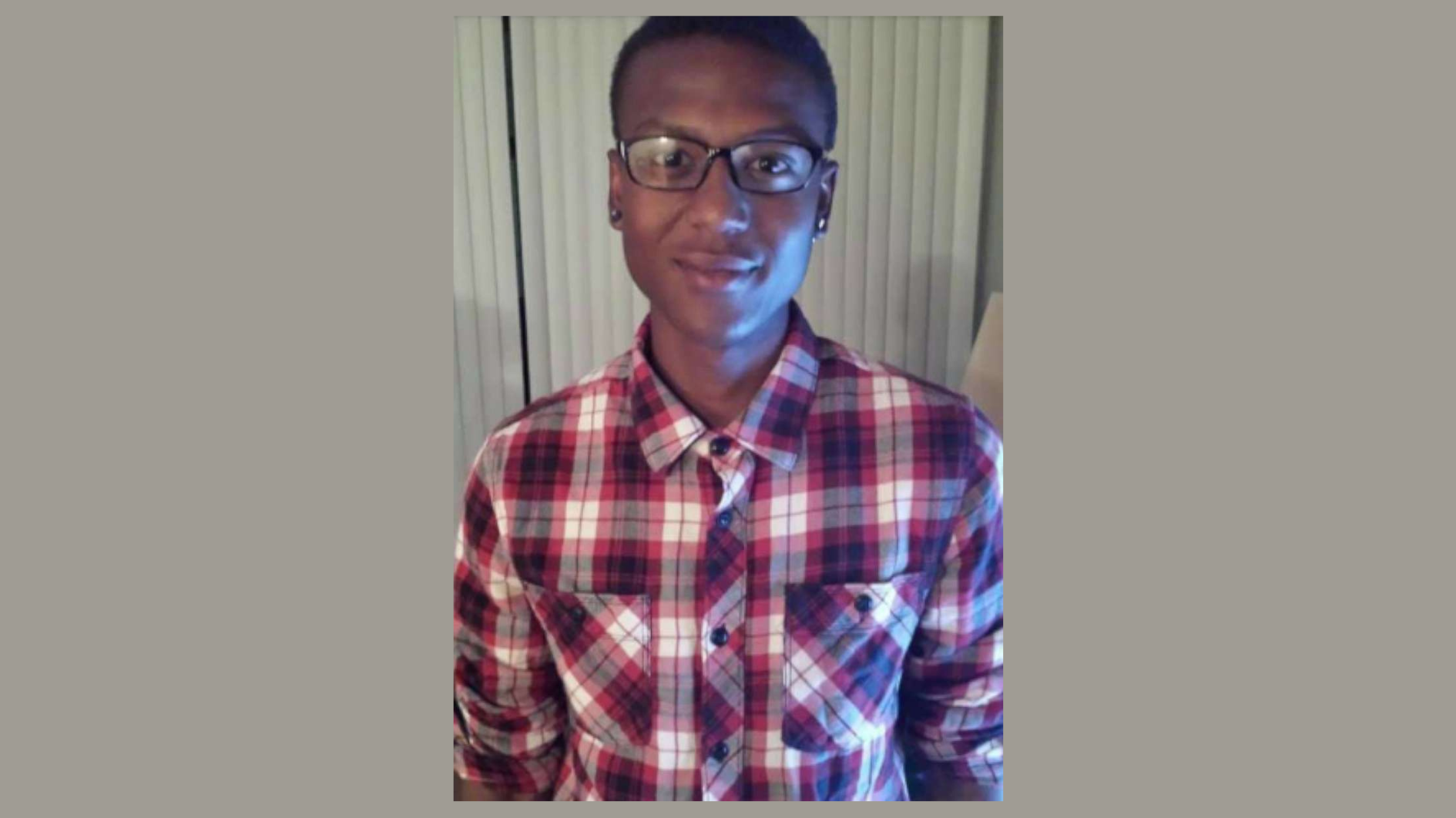
Elijah McClain in an undated photo. (Family photo)
(NEW YORK) -- The Colorado Court of Appeals reversed the convictions of two former Aurora paramedics, who were convicted in December 2023 of criminally negligent homicide in the 2019 death of Elijah McClain, a 23-year-old unarmed Black man who was walking home from a convenience store.
In reversing the convictions, the judge ruled on Thursday that the case should be sent back to the district court for a possible retrial.
McClain's case gained national attention, particularly in the wake of the May 2020 killing of George Floyd, becoming one of the prominent cases that fueled Black Lives Matter protests across the country.
Sheneen McClain, Elijah McClain's mother, reacted to the reversal of the convictions in a post on social media on Thursday, calling the move "corrupt and cowardly."
"I am not surprised by the denial of true justice for American citizens in the hands of government branches who allow criminal behaviors in their police agencies," she wrote. "They are corrupt and cowardly."
ABC News has reached out to attorneys for the paramedics, Peter Cichuniec and Jeremy Cooper, for comment.
Colorado Attorney General Phil Weiser told ABC News in a statement that his office stands by its decision to charge the paramedics and "is committed to defending these convictions through the appeals. Justice demands it."
ABC News reached out to Weiser's office for further comment.
The charges
Cichuniec and Cooper were accused of administering an excessive amount of ketamine to sedate McClain after an encounter with police on Aug. 24, 2019.
Cichuniec and Cooper were found guilty of criminally negligent homicide on Dec. 23, 2023. Cichuniec was also convicted of assault in the second-degree via the unlawful administration of drugs. Cooper was acquitted of the assault charge in 2023, and they both pleaded not guilty at trial.
The appeals court ruling upheld Cichuniec's assault conviction, but reversed the negligent homicide conviction.
Cooper was sentenced in 2024 to a four-year probationary sentence for negligent homicide. Meanwhile, Cichuniec was sentenced to five years in prison with a three-year period of parole for the assault charge and one year to be served concurrently on the negligent homicide charge.
Cichuniec and Cooper separately appealed their convictions.
In Thursday's ruling, the appeals court agreed with Cooper's defense team that the lower court "misled" jurors by failing to clarify the standard of care applicable to the charge of criminally negligent homicide after jurors asked the court for a definition.
"By telling the jurors to apply the 'common and ordinary meanings' of the words in the instruction, the court failed to shine any light on the issue and in fact misled the jurors as to the applicable standard of care: The proper standard wasn't that of a generic reasonable person but of a person in Cooper's profession under the existing circumstances," the ruling reads.
The judge ruled that the reversal of Cooper's conviction also applies to Cichuniec because they were both tried together in that case.
"The two were tried on identical theories of guilt and the evidence against them was, while not identical, sufficiently similar that we can't conclude that the errors were harmless as to Cichuniec," the ruling says.
What happened to Elijah McClain?
McClain was confronted by police while walking home from a convenience store after a 911 caller told authorities they had seen someone "sketchy" in the area.
McClain was unarmed and wearing a ski mask at the time. His family says he had anemia, a blood condition that can make people feel cold more easily.
When officers arrived on the scene, they told McClain they had a right to stop him because he was "being suspicious."
In police body camera footage, McClain can be heard telling police he was going home, and that "I have a right to go where I am going."
Officer Nathan Woodyard placed McClain in a carotid, or choke, hold and he and the other two officers on the scene moved McClain by force to the grass and restrained him.
When Cooper and Cichuniec arrived, McClain was given a shot of 500 milligrams of ketamine to sedate him and he was loaded into an ambulance where he had a heart attack, according to investigators.
McClain died on Aug. 30, 2019, three days after doctors pronounced him brain dead and he was removed from life support, officials said.
Former police officer Randy Roedema was found guilty of criminally negligent homicide and assault in the third degree in McClain's death. He was sentenced to more than one year in the county jail in January.
Two other officers, Jason Rosenblatt and Woodyard, were found not guilty on charges of reckless manslaughter and criminally negligent homicide. Rosenblatt was also acquitted on charges of assault in the second degree.
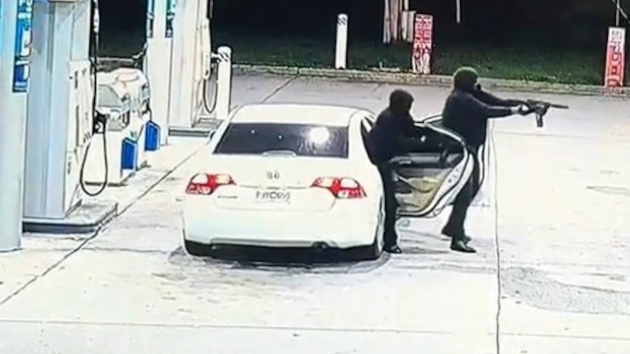
The Hammond Police Department is searching for gunmen who shot and killed an innocent 50-year-old woman at a Chevron gas station in Hammond, Louisiana, June 4, 2026. (Hammond Police Department)
(HAMMOND, La.) -- An innocent woman was killed when gunmen fired 70 to 80 bullets into a car at a Louisiana gas station, apparently believing that their target was in the car, according to police.
Hammond police said the gunmen's alleged target had been in the car before the shooting, but not at the time of the shooting.
Before the gunfire erupted early Thursday, the suspects were stalking a car at a farm, Hammond Police Chief Edwin Bergeron Jr. said at a news conference.
"At some point [the alleged target] was in the vehicle, and then exited the vehicle to ride with someone else," Bergeron said.
The victim's car then left the farm and went to a Chevron gas station, the chief said, and the suspects followed.
When the driver of the victim's car got out and went inside the gas station, the suspects' car "pulled up next to it ... and began shooting," Bergeron said.
The suspects fired between 70 and 80 shots, taking the life of 50-year-old Patricia Shepard, who was sitting in the car, Bergeron said.
She was an "absolute innocent victim," the chief said. "She was not involved."
Bergeron said investigators are searching for at least two or three suspects.
"We will not rest until the scumbags like this go to jail ... for them to roll up and kill an innocent woman in a car because they thought it was somebody else," he said.
The suspects were driving a car that was stolen in Mississippi earlier in the week, police said.
Authorities urge anyone with information to call the Hammond Police Department at 985-277-5755 or the Crime Stoppers anonymous tip line at 1-800-554-5245.
The judge's gavel and scales as a symbol of the judiciary and justice. (SimpleImages/Getty Images)
(NEW YORK) -- A Virginia man found guilty of killing his wife and a stranger lured to their home in an elaborate plot to get rid of his spouse so he could be with his au pair is set to be sentenced on Friday.
Brendan Banfield was convicted in the 2023 murders of his wife and a man prosecutors said he "catfished" on a fetish website. Prosecutors said Brendan Banfield pretended to be his wife to lure the man to their Fairfax County home for what was believed to be a consensual fake rape scenario in order to frame that stranger for his wife's murder.
A jury found him guilty of two counts of aggravated murder in February. He faces a life sentence without the possibility of parole.
The former IRS agent was charged with two counts of aggravated murder in 2024 following a monthslong investigation into the deaths of his wife, 37-year-old nurse Christine Banfield, and the stranger, 39-year-old Joseph Ryan.
Prosecutors said Brendan Banfield plotted the murders with the family's au pair, Juliana Peres Magalhães, with whom he was having an affair.
Police responded to a 911 call from the home in Reston on Feb. 24, 2023, and found Ryan dead in an upstairs bedroom with gunshot wounds to his head and chest. Christine Banfield had been stabbed seven times in the neck, prosecutors said.
At the time, Magalhães and Banfield told police they came home to find Ryan stabbing Christine Banfield to death. Banfield and Magalhães each shot Ryan, they said in their 911 call and to responding officers at the scene.
Magalhães was arrested first and initially charged with second-degree murder for the death of Ryan. She pleaded guilty to manslaughter in 2024 and was sentenced to 10 years in prison, the maximum, in February. Prosecutors said she admitted to shooting Ryan at Brendan Banfield's direction.
Brendan Banfield was arrested several months after Magalhães and charged with two counts of aggravated murder for the deaths of his wife and Ryan.
Prosecutors said Brendan Banfield stabbed his wife with a kitchen knife that Ryan had been instructed to bring, and, before calling 911, altered the crime scene to make it look as though Ryan stabbed her -- including by transferring some of his wife's blood onto Ryan's hands.
Magalhães testified against Brendan Banfield during his trial, telling the court that he expressed his desire to "get rid of" his wife in October 2022. She said he told her he wanted to marry her and have children with her, and that he didn't want to divorce his wife because "she would have more money than he would" and because he wanted custody of the couple's daughter.
She prayed for forgiveness from the victims' families during her sentencing hearing.
"There is nothing I could possibly do to make it up to you, for your loss. There are so many regrets, this is my biggest. It's a tragedy I have been carrying with me, and I know I can never take back the devastation of what I have done," she said.
Following Magalhães' sentencing, Fairfax County Commonwealth's Attorney Steve Descano said the au pair's testimony was "invaluable in helping the jury understand the convoluted double-murder plot orchestrated by Brendan Banfield."
During his three-week-long trial, Brendan Banfield testified in his own defense. He admitted to the affair though maintained his innocence.
He said he came home on Feb. 24, 2023, after the au pair called to alert him about a stranger in the home. He said he went up to his bedroom with his gun drawn and found his wife naked with Ryan and that she called out, "Brendan, he has a knife!"
"I was extremely terrified," Brendan Banfield told the jury. "I don't think I've ever been more panicked in my life."
He said he fired his government-issued firearm, striking Ryan in the head, after he said the man appeared to stab his wife.
The couple's then-4-year-old daughter was in the basement of the house at the time of the killings. Brendan Banfield was additionally found guilty of child endangerment, as well as using a firearm while committing or attempting to commit murder.
ABC News' Sophie Sonnenfeld contributed to this report.
A 31-page report on the White House ballroom submitted to the panels reviewing the project show the proposed addition to the White House from additional angles and features new renderings of the project. Commission of Fine Arts
(WASHINGTON) -- President Donald Trump's plans to build a White House ballroom are in the hands of three appellate judges who will hear oral arguments Friday over whether construction should be allowed to continue.
The panel of the U.S. Court of Appeals for the D.C. Circuit will weigh the Trump administration's request to throw out a lower court judge's order halting the construction, in a lawsuit brought by historic preservationists.
U.S. District Judge Richard Leon ruled in late March that Trump has gone beyond his authority in building the ballroom, given that it has not been authorized by Congress. Leon's order was administratively stayed by the appellate panel on April 17, a move that has allowed construction to continue since then.
The Trump administration has argued in court papers that beyond the president's desire to build a large, permanent event space to host future inaugurations and state dinners, the ballroom -- part of a broader "East Wing Modernization Project" -- is essential to national security.
The Justice Department points to recent shootings that have occurred in relatively close proximity to the president, including at the White House Correspondents' Dinner in April and on Pennsylvania Avenue in May, as examples of why the ballroom is needed for security reasons. Both of those incidents had gunmen allegedly exchanging fire with Secret Service police officers.
The government's filings in the case have described the ballroom project as a fortification of the entire White House complex, saying that with its "deeply ensconced bunker, and its attendant bomb shelters, hospitals, medical facilities, and other National Security functions, to the highly sophisticated Drone Port and Sniper Nests atop the Ballroom, the complex is a highly knitted, unified whole."
The administration also argues that the group that has sued, the National Trust for Historic Preservation, lacks the standing necessary to bring a case.
Lawyers for the National Trust say that it's Congress, not the president, that controls the grounds of the White House, and that Leon was correct to determine in his ruling that no statute "comes close" to giving Trump the authority he claims to construct a large edifice next to the executive mansion.
"The public's interest in its government following the law, and the maintenance of the President's proper role in our system of separated powers, underscore that the district court did not abuse its discretion," they write in a brief, urging the appeals court judges to let Judge Leon's injunction stand.
Prior to beginning consideration this week of an immigration enforcement funding bill, Senate Republicans removed a $1 billion provision, drafted in response to a request from the Secret Service, that officials said a portion of which would have gone toward security-related aspects of the ballroom project.
Arguments in the case will be heard by Obama-appointee Patricia Millett, Trump-appointee Neomi Rao and Biden-appointee Brad Garcia.
ABC News' Peter Charalambous contributed to this report.